
Deep Sea Creatures: Life in the Ocean Abyss
Deep sea creatures reveal a hidden world beneath the ocean surface. Explore bioluminescence, unique survival tactics, and rare animal wonders in vivid detail.
Imagine plunging into a world where sunlight never reaches, pressure could crush a submarine, and life glows in the endless dark. That’s the ocean’s abyss, the domain of deep sea creatures, where survival means creativity and adaptation beyond anything you’d find on land.
Scientists are fascinated by the deep sea creatures that thrive here, despite extremes of cold, crushing pressure, and perpetual night. Recent research uncovers new species, ingenious survival tricks like bioluminescence, and the incredible biodiversity of hydrothermal vent communities. These findings remind us that we’ve barely scratched the surface of our own planet’s secrets.
If you’ve ever searched for deep sea animals, most sites just list the “weirdest fish” or show glowing monsters without explaining why these creatures matter. The real story is much bigger: how they reshape what’s possible for life and what we can learn from them.
This article dives deeper. You’ll discover not just strange facts but real insights, adaptations, the science of bioluminescence, hydrothermal vent marvels, and what these creatures can teach us. Ready to explore the ocean’s wildest mysteries?
How deep sea creatures adapt to the abyss
How do deep sea creatures handle life in such an extreme world? The answer is simple: adaptation, inside and out. Let’s explore how these animals stay alive where few others can.
Extreme pressure and temperature adaptations
Survival at extreme pressure means smart chemistry and structures. Many deep sea species face over 1,000 times the atmospheric pressure found at sea level and icy temperatures near 4°C.
These creatures use special molecules called piezolytes to keep their proteins stable. Their cell membranes stay fluid, not brittle, even under crushing weight. Most have soft, gelatinous bodies and almost no bone, think jellyfish or tiny fish less than 25cm long. They skip swim bladders, which could burst down here.
Brittle stars and bacteria like Moritella have evolved remarkable ways to fold and protect the proteins that keep them alive. Slow metabolism is a lifesaver: it lets them survive when food is very limited.
Fun fact: Next time you see a deep sea animal on TV, look for its squishy shape. That’s the secret behind extreme pressure survival.
Unique body structures and senses
The bodies of these animals are custom-built for the dark. They rely on gelatinous flesh, reduced bones, and super-sensitive lines along their bodies to sense movement, like having built-in radar.
Some, like the pelican eel, have ultra-black skin that absorbs 99.7% of light. That makes them nearly invisible. Others use red coloring, which disappears in deep water since red light is filtered out first.
Enhanced senses help them detect any shift in water, from food to danger. Wood-boring bivalves survive on sunken logs, a great example of adapting to what’s available.
Want to spot a camouflage master? Watch for creatures with glowing lures or giant eyes, they’re built for deep sea stealth and detection.
The role of bioluminescence in survival
Glowing is a matter of life and death in the abyss. About 90% of deep-sea animals bioluminesce to hunt, warn off predators, or find mates.
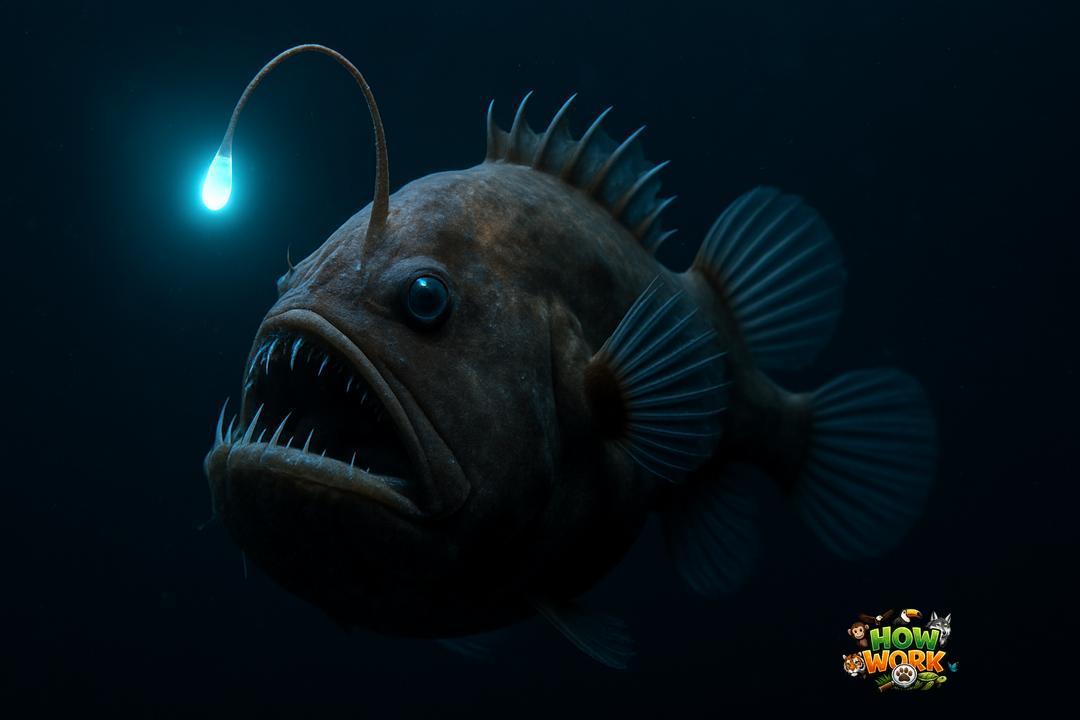
The anglerfish’s light lures dinner close. Vampire squid can fire off glowing clouds for a quick getaway. Some worms, like Swima bombiviridis, drop little light “bombs” to distract threats. The dragonfish uses red light, invisible to most neighbors, for stealth attacks.
Next time you see a light show in a nature doc, remember: true deep sea glow means survival. Imagine scientists hoping to use these strategies for new underwater tech or medicine some day.
The diverse cast: Notable species and ecosystem roles
The deep sea isn’t empty, it’s bustling with creatures. From fierce predators to tiny powerhouses and unlikely friends, each animal plays a role that keeps the undersea world in balance.
Top predators and scavengers
Hunters and clean-up crews rule the dark. Big predators control prey numbers, keeping populations healthy, much like lynxes and snowshoe hares on land.
Prey fight back with tricks like camouflage, spikes, and even toxic colors. Meanwhile, scavengers recycle nutrients. In the ocean, think of animals devouring fallen fish or whales, making sure nothing goes to waste. This recycling keeps energy moving through the habitat.
Take a practical tip: If you see a nature doc on the ocean floor, notice how scavengers gather quickly, a real team effort to break down what’s left behind.
Tiny but mighty: Micro-creatures
Microbes run the engine of the deep. These invisible life-forms help every other creature survive. In guts, more than 400 different bacteria help animals eat foods they otherwise couldn’t digest.
Corals and algae work together to build reefs, a mutual partnership called mutualism. Nitrogen-fixing microbes help plants too. All these little creatures are crucial for breaking down waste and maintaining stability in the ecosystem.
Actionable idea: If you keep an aquarium, healthy microbe balance is just as important as any big fish inside.
Symbiosis and food chain dynamics
Living together means survival for all. In the deep ocean, animals partner up in ways that help, or sometimes harm, each other.
There are several flavors: mutualism, commensalism, and predation. Gut microbes let some animals specialize their diets. Resource sharing keeps competition down and helps many species live side-by-side.
Remember: “Symbioses are more common than we once thought.” Takeaway for us? It’s all about the right partnerships, even for the smallest and strangest deep sea species.
Hydrothermal vents and the mystery of deep-sea habitats
Hydrothermal vents are like undersea city parks, rare, crowded, and buzzing with life against the odds. These hotspots transform the dark ocean floor into thriving neighborhoods for creatures you won’t find anywhere else.
How hydrothermal vents support life
Vents provide warm, chemical-rich “oases” where extreme life flourishes. Over 500 active vent fields have been found since scientists first spotted one in 1977. Vents fill the water with minerals that feed huge communities, from giant clams to tubeworms, all adapted to severe pressure and heat.
Survival here isn’t easy. Some creatures, called barophiles, grow waxy layers and have special cellular tricks to handle water pressure that would crush most animals. If you want to picture this, imagine animals thriving right beside underwater volcanoes, heat and chemicals instead of sunlight and soil.
Chemosynthesis versus photosynthesis
Deep vent ecosystems run on chemosynthesis instead of photosynthesis. Instead of using sunlight, bacteria and archaea at vents turn chemicals like hydrogen sulfide and methane into food.
These ecosystem builders are the food web’s base, supporting all life above them. Oxygen from surface photosynthesis still matters, but these communities could, in theory, last for thousands of years on chemical power alone.
Fun fact: Next time you hear about ocean “vent fields,” remember, most life down here doesn’t even need sunlight to begin with.
New discoveries in vent communities
Explorers keep finding surprises at hydrothermal vents. In 2023, scientists found living animals lurking beneath vents inside volcanic rock. One 2025 mission in the South Sandwich Islands uncovered new vents at 700 meters deep with 30 undiscovered species like carnivorous sponges and barnacles.
Want to keep up with cutting-edge ocean science? Watch for fresh discoveries at these “vent life oases”, they prove that the deep sea holds wonders we haven’t even imagined yet.
Light in the dark: Bioluminescence and camouflage
The deep sea is pitch-black, but that doesn’t mean it’s dull. Here, animals master light and invisibility to survive each day.
Purpose of bioluminescence
Bioluminescence is nature’s survival light. Deep sea creatures use glowing chemicals to blend in, frighten enemies, or attract prey. Over 27 fish groups evolved bioluminescence, it isn’t just rare luck.
Squid match overhead light to disappear from predators below (counter-illumination), while cookiecutter sharks mimic smaller fish to lure their own meals. The Atolla jellyfish flashes when attacked, calling bigger predators, a wild “burglar alarm” strategy. Want an actionable idea? Study aquarium fish with light organs for a taste of this natural glow.
Predator-prey strategies
Light helps both hunters and hiders. Prey might fire off blinding flashes or spray glowing liquid, like vampire squid. Shrimp and deep-sea jellyfish trigger bursts to distract predators or attract someone bigger to eat the attacker. The anglerfish’s famous glowing lure entices curious victims right to its jaws.
Tip: When watching a documentary, check how fast prey release their light, sometimes in just 20 milliseconds! That’s a true “predator getaway trick.”
Bio-inspired technology advances
Human science is copying nature’s brightest tricks. NanoLuc, pulled from a shrimp, now powers non-invasive medical tests. Researchers recently created ultra-bright red luciferase for imaging inside living tissue, deeper and clearer than before.
Tech coming from these animals doesn’t just light up labs. It helps discover new medicines and track cell health in real time. If you like cool gadgets, remember: the secret’s in the sea.
Challenges and threats: Pollution, climate change, and exploration
Deep sea creatures are tougher than most, but even they have limits. Today’s ocean faces new dangers from plastic, mining, and climate shifts. Here’s where these threats, and hope, meet.
Human impact and deep-sea mining
People leave marks on the ocean floor. Deep-sea mining for metals and minerals disturbs habitats that can take centuries to recover. Scars from a single mining test in the Pacific stayed visible over 26 years later.
Plastics and toxic waste also now reach even the deepest trenches. That means plastic on ocean floor, not just the surface. If you use electronics, you’re connected to minerals dug up from these fragile places.
Climate change effects
Warming waters and acidification stress deep-sea life. As the oceans heat up, creatures adapted to cold and stable conditions struggle to survive. More carbon dioxide means more acidic water, which can dissolve the shells of some vent animals and disrupt food webs.
Fun fact (and warning): Some scientists now call certain vent communities “canaries in the coal mine” for changes in ocean health.
Efforts for protection and research
Global action is starting to help. In 2023, countries agreed on a new treaty to protect 30% of oceans by 2030, a potential win for deep sea habitats.
Researchers build less-invasive tools to explore with care, learning more while avoiding harm. If you want to pitch in, support organizations focused on ocean science and smart exploration. Every voice counts for the world below.
What deep sea creatures reveal about life, and ourselves
Deep sea creatures show us that life is capable of extraordinary adaptability. If animals can thrive under 1,000 times our air pressure, in near-freezing darkness, there are few limits to what’s possible, for them, or even us.
The ocean covers 71% of our planet and holds about 1.3 billion cubic kilometers of water. Scientists know of 250,000 marine species but believe there could be up to 2 million. Many new species are found every year, sometimes a 1% jump in discoveries daily.
Some creatures, like anglerfish and barreleye fish, invent wild strategies using light. Others, such as tube worms, skip sunlight entirely and live on chemicals at hydrothermal vents. This proves that life doesn’t always follow the easy path. About 75% of midwater animals even create their own light to survive.
These animals spark real-world inventions, too. Scientists borrow bioluminescent proteins for better medical tests. Ocean pioneer Bruce Robison reminds us: “midwater is the planet’s largest habitat.” Every new deep sea discovery expands both our scientific knowledge and our sense of wonder. In the end, they remind us to keep exploring and to never underestimate nature, or ourselves.