
Animal Migration: Epic Journeys Across the Globe
Animal migration defines epic journeys. Discover why, how, and which creatures migrate, with real-life examples and unique facts. Explore more!
Imagine embarking on a journey thousands of miles long, no suitcase, no GPS, just instinct. That’s the reality for animals who cross continents, oceans, and skies every year during animal migration. These aren’t random wanderings. They’re some of the most awe-inspiring natural events on our planet, woven into the rhythm of life itself.
Migration shapes ecosystems, affects global food chains, and even influences human cultures. Scientists say animal migration is essential for species survival, enabling animals to find food, escape harsh weather, and reach safe breeding grounds. A single whale or a flock of birds might travel farther in a season than most people do in a lifetime.
But too often, the real story gets boiled down to “they move to survive.” That misses the incredible diversity, science, and drama at play, from mind-boggling navigation skills to the perils of a changing planet. Quick guides gloss over the unique strategies and breathtaking challenges these creatures face.
In this article, you’ll dive into the world’s most epic animal migrations, unravel the mysteries behind how and why creatures move, and get up-to-date insights on what’s threatening these natural wonders. Get ready for a trip that’s as much about wonder as it is about survival.
What is animal migration? Defining the epic journey
Animal migration is a special kind of epic journey. Many wild creatures move long distances between habitats, often making seasonal round trips year after year. These travels help them find food, better weather, or safe places to have their young. Classic examples include birds, whales, and huge groups of wildebeest.
Key differences between migration and relocation
The key difference: migration is round trip, relocation is one-way. Migration means leaving and then returning every year. It follows a clear, repeatable path.
In contrast, relocation is a permanent move. For example, monarch butterflies migrate about 8,000 kilometers from the US and Canada to Mexico, then back again. Bar-headed geese fly 7,000 miles without stopping and return to the same spot. Relocating animals do not come back. As zoologist J.S. Kennedy said, “Migratory behavior is persistent…effecting by the animal’s own locomotory exertions.” Understanding this helps you spot real migration in nature.
Why do animals migrate instead of adapting?
Migrating helps animals find what they need when local resources run out. Many animals move to survive tough weather or when food becomes scarce.
Sticking to one spot can be dangerous if the climate suddenly changes or if supplies dry up. For example, Arctic terns travel from pole to pole every year to get the best food, no small trip! Experts say, “If you took the migration away… they’d be in trouble.” Grey wolves can roam over 7,200 kilometers per year. Sometimes, it’s simply safer or smarter to move than to stay and try to adapt. If you want to spot animal migration, watch for patterns that repeat every year, nature loves a schedule.
The main triggers: Why animals migrate
Migration usually happens for three big reasons. Animals move to chase food, escape tough weather and dangers, or find perfect breeding spots. Each journey has its own story.
Chasing food: Seasonal abundance
Seasonal food availability is the biggest reason animals migrate. They head to places where food is easy to find at certain times of the year.
For example, wildebeest travel across the Serengeti for fresh grass and water when the dry season hits. Many birds fly north in spring for booming insect counts and return south as food runs out. Some birds that migrate can raise 4–6 chicks per year, compared to only 2–3 for birds that stay in one place. This helps animals survive and keeps habitats from getting overgrazed.
Escaping harsh climates and predators
Animals migrate to escape harsh climates and seasonal dangers. Cold, drought, and hungry predators can make one place unsafe during part of the year.
Monarch butterflies fly from Canada to Mexico every fall to avoid freezing winters. Humpback whales move between icy feeding areas and warm breeding lagoons. Migration can even help animals avoid local predators and pesky parasites, though sometimes new dangers pop up along the way. Some birds can survive cold as long as there is enough food, but many still choose to move when things get rough.
Breeding: Finding the perfect place
Breeding grounds are vital for animal migration. Animals want spots with plenty of food and safe places to nest or have babies.
They rely on cues like daylight, rain, or temperature to know when to go. But climate change impact is making these signals less reliable. For example, pied flycatchers sometimes arrive at their breeding places too late, after the main food boom. This shows how fragile the balance can be for creatures on the move.
Navigation secrets: How animals find their way
Animal migration is a true marvel because so many creatures travel without maps or GPS. How do they do it? Their “navigation toolbox” might surprise you.
Magnetic fields, star maps, and sun compasses
Many migrating animals use Earth’s magnetic sense, stars, and the sun to find their way.
Sea turtles use the planet’s magnetic field to return to birthplace beaches. Homing pigeons switch to magnetic navigation on cloudy days. Monarch butterflies use the sun as a compass, and birds often follow star maps for navigation. For example, Manx shearwaters use visible stars, while dung beetles steer by the Milky Way. One shark expert says, “Magnetic-based navigation is responsible for these incredible successes.” Using a mix of cues helps animals stay on course, even during long journeys.
Sensory abilities unique to migratory species
Some species have unique sensory powers for migration.
Octopuses use strong spatial memory to map their ocean homes. Salmon “imprint” on magnetic maps and smells to return to their birth rivers years later. Scientists say more than 50 species, from lobsters to birds, use magnetic information to complete epic round trips. Some even combine these skills with sight, sound, and taste for pinpoint accuracy. Try watching migratory birds at sunrise or sunset, they often use the light to orient themselves as they set off on their seasonal journeys.
Famous migrations: Record-breaking journeys around the world
Some migrations are so epic, they make headlines and draw crowds. Here are three journeys that set records and showcase the power of instinct.
The Great Migration in Africa
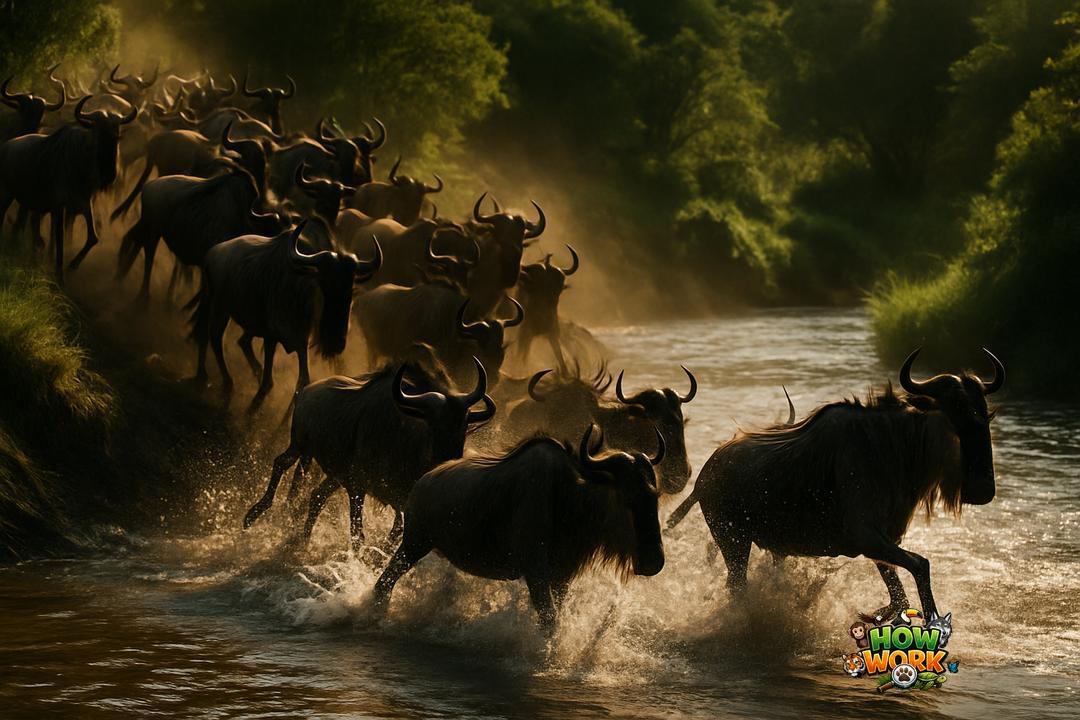
Millions on the move every year. Over 1.5–2 million wildebeest, plus hundreds of thousands of zebras and gazelles, complete a 1,000–1,800 mile journey through Tanzania and Kenya.
This massive group follows fresh grass and rain, crossing rivers packed with crocodiles. BBC documentaries have shown young wildebeest making risky cliff jumps and narrow escapes. Pounding hooves create a pulse for the planet, marking this as one of Earth’s largest mammal migrations.
Arctic tern’s pole-to-pole flight
The longest bird journey on earth. Arctic terns can travel 40,000–55,000 miles yearly, flying from the Arctic to the Antarctic and back.
In their lifetime, some may fly over three times the distance to the moon and back. These small birds (only about 120 grams) “enjoy” two summers each year thanks to their pole-to-pole endurance. Flocks glide on ocean breezes, making them true flying champions.
Gray whales’ long-distance swim
Mammal mega-swim: Gray whales make history. Every year, these whales migrate up to 14,000 miles round-trip, from cold Arctic waters to warm lagoons in Baja California.
One gray whale named Varvara was tracked making a record 14,000-mile journey across the Pacific in 172 days. The gray whale migration stands as the longest of any mammal and highlights the challenges these giants face, including dangerous crossings and dwindling numbers of their kind.
Migration beyond birds: Mammals, insects, and sea creatures on the move
Birds may get the spotlight, but many mammals, insects, and sea creatures outdo them in their own ways. These migrations push the limits of strength, memory, and adaptation.
Caribou, reindeer, and their frozen highways
The longest land mammal migration belongs to caribou and reindeer. Some herds travel over 1,200 miles a year across the Arctic’s frozen spaces.
They group into herds as large as 500,000, moving for new grass and calving grounds. But their icy “highways” are melting. Caribou numbers have dropped nearly 50% since 2000 because of climate change and thawing permafrost.
Monarch butterflies and multi-generational travel
Monarch butterfly migration is a true multi-generational travel feat. These butterflies journey 2,000–3,000 miles to Mexico each fall, but no single butterfly ever completes the round trip.
Instead, it takes several generations, each continuing where the last left off. In 2023, their main winter population shrank to just 2.8 hectares, an 80% drop since the 1990s. Monarchs rely on sun and magnetic cues to stay on course.
Epic ocean voyages: Whales and salmon
Ocean migrations are the definition of epic. Gray whales swim over 13,000 miles every year, from Russia to Mexico and back.
Chinook salmon travel up to 900 miles upstream to spawn, dying after their long journey. Their young head out to sea and somehow find the same rivers later. These stories remind us that migration shapes animal life cycles and the health of oceans and rivers.
Modern threats: Challenges facing migratory animals today
Modern life brings new risks to animals on the move. Migrations that once spanned great distances now face growing roadblocks, seen and unseen.
Climate change and shifting patterns
Warming temperatures are shifting migration patterns worldwide. Migratory animals rely on weather cues and seasonal food peaks.
But climate change means spring comes earlier or floods hit harder. For example, coral bleaching, sea ice loss, and unpredictable rains disrupt everything from caribou to sea turtles. Scientists warn that 1-in-5 migratory species are now at risk.
Barriers and habitat loss
Physical barriers and shrinking habitats threaten more animals every year. Highways, dams, and expanding farms block traditional migration routes.
Salmon struggle with dams on spawning rivers. Monarch butterflies lose milkweed as fields vanish. In Africa, elephants’ ancient paths grow narrower. Conservationists build wildlife corridors and breach dams to keep pathways open.
Tracking and protecting migrating species
New tracking tools help protect animals in real time. GPS collars and satellites spot the journeys and dangers animals face.
Efforts like the UN Global Animal Migration Atlas map critical paths to guide protection work. Small changes matter too: plant native flowers for butterflies or support wetlands for birds. Even a single safe passage can be the difference between survival and extinction.
Surprising facts and recent discoveries about animal migration
Scientists discover new surprises about migration each year. From unexpected skills to adventures measured in miles, or sometimes just meters, these journeys keep breaking records.
Unusual navigation behaviors
Animals use unexpected navigation tricks. Some dragonflies migrate in a relay of three generations, relying on hydrogen signals in their wings and air temperatures.
Mole salamanders follow wet smells and even geomagnetic cues during their “Big Night.” White storks learn the best shortcuts with age, and great white sharks combine the Earth’s magnetic fields and sight for spot-on returns. Older birds often take more direct routes, thanks to their growing memory.
Longest and shortest migrations
Animal journeys come in all sizes. Gray whales make a 10,000–12,000 mile round trip every year. Caribou herds can travel hundreds of miles.
At the other extreme, Galapagos giant tortoises migrate less than 4 miles as seasons shift. In the U.S., deer and elk may simply head uphill to avoid the snow. It shows the world’s shortest journey can be just as vital as the longest.
New tech reveals hidden journeys
Modern science uncovers journeys we once missed. Satellites recently spotted a huge walrus gathering in the Arctic.
Drones found 41,000+ nesting turtles in the Amazon. Tiny chemical tags in dragonfly wings finally mapped their relay race. Every year, new technology helps us piece together more of nature’s global puzzle. Try out online migration maps, the modern tools that turn ordinary animal journeys into headline news.
What animal migration teaches us about nature’s resilience
Animal migration is proof of nature’s resilience and adaptability. Even when faced with harsh environments, many species manage to survive and thrive by making epic journeys year after year.
Every season, over a million wildebeest trek 1,200 miles across Africa, braving predators and fast rivers for grass and water. Monarch butterflies can fly up to 3,000 miles while salmon and sea turtles return against the odds to their birthplaces. These journeys aren’t just for survival, they connect different ecosystems, helping keep nature strong even after disasters.
Migration shows us that change isn’t always a threat. Many species use it as their main way to adjust when the weather, food, or land shifts. Experts say, “Migration is a behavior developed to cope with extreme environmental variability.” But today, the rules are changing faster than ever: climate change is causing earlier migrations and mismatched food supplies. That’s part of why around 73% of global wildlife populations have declined since 1970.
Watching migration reminds us that resilience comes from movement, teamwork, and being able to change with the times. The lesson? Protecting migration routes protects nature’s power to adapt, and makes a difference for future generations of animals and people alike.
Animal migration is the regular movement of animals from one place to another, usually in response to seasonal changes, to find food, breed, or escape harsh weather. Many return to their starting point each year.
Animals migrate mainly to find food, reach safe breeding grounds, or move to better climates. These movements are driven mostly by changes in season and resource availability.
Migrating animals use a mix of instincts and environmental cues. They may follow the sun, stars, Earth's magnetic field, landmarks, or even inherited genetic patterns. Scientists are still learning about some of these methods.
The Arctic tern has the longest known migration, traveling up to about 56,000 miles round trip each year from the Arctic to the Antarctic. Monarch butterflies and gray whales also make long journeys, each spanning thousands of miles.