
Animal Records: The Fastest, Biggest, and Strongest
Animal records unveil the fastest, biggest, and strongest creatures. Discover wild extremes and unique stats that surprise even animal lovers.
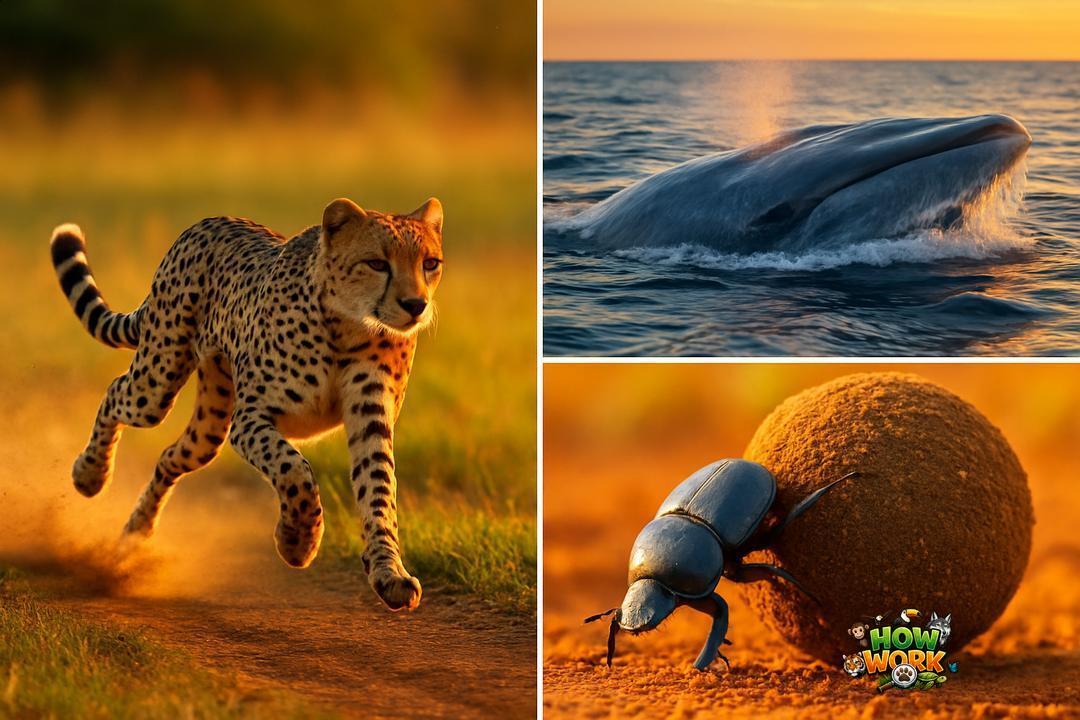
Picture a world where every animal’s greatest feat is captured in a stat book, whether it’s the cheetah’s speed, the blue whale’s size, or the dung beetle’s jaw-dropping strength. That’s the thrill and insight of diving into animal records: a journey that turns wild nature into a gallery of extraordinary facts.
While many of us marvel at animal documentaries or zookeeper stories, the reality is that **animal records** are far more than trivia. Systematic documentation of animal behaviors, health, and physical achievements guides real-world decisions in zoos, research, and conservation. Keeper logs don’t just track statistics, they help scientists see trends, improve welfare, and conserve endangered species. Electronic systems and global databases now make these records more accessible and powerful than ever.
But most articles just focus on the “biggest” or “fastest,” skipping the truly odd records, the science behind why they matter, or how data from daily logs can literally prevent extinctions. Quick lists miss the connection between fun facts and real animal care.
This article breaks that mold. You’ll explore jaw-dropping records along with the backstory: how tracking them helps scientists, what oddities reveal about adaptation, and the remarkable ways animal records are reshaping conservation. Ready to see wildlife in a whole new light?
What are animal records and why do they matter?
Animal records are the backbone of proper animal care. These are detailed logs about an animal’s daily habits, medical visits, and big events. From the moment an animal joins a zoo, farm, or sanctuary, its story gets tracked step by step.
Defining animal records: what counts and why
Animal records include every detail that shapes an animal’s life. That means unique IDs, keeper logs, vaccination records, nutrition reports, and even photos or microchip numbers. Zoos use things like tattoos or special tags to tell one animal from another. This helps prevent mix-ups and makes sure each creature gets the right care.
These logs aren’t just stacks of paperwork. They’re guides for daily decisions, like what to feed, when to check on health, and how to notice if something’s off. If a zoo missed a behavior change in its records, a sick animal might not get help in time. Complete and accurate documentation can be lifesaving.
Want to build better care for your own animals? Start with a binder or app to track basic info: ID, age, checkups, and what you observe.
How accurate documentation shapes care and conservation
Accurate documentation isn’t just busywork, it’s the path to better animal health and even species survival. When caregivers track everything, trends become clear. For example, good records can spot patterns that warn of a disease outbreak before it spreads, saving many lives in the process.
Veterinarians and scientists use animal records for breeding plans, tracking family trees, and planning reintroductions for endangered species. On farms, records help avoid drug residue problems and prove animals are healthy. In sanctuaries, intake photos can show how a rescued animal recovers over time, giving proof of good care.
As one expert says: “Records play a role in breeding, genetic diversity tracking, reintroduction programs and welfare monitoring”. Want to apply this at home? Even basic notes about changes in your pet’s mood, eating, or habits could catch problems early and make a big difference.
Fastest animals on Earth: breaking the speed barrier
Breaking speed barriers is a survival game in the wild. Some animals use amazing bursts of speed to hunt or escape. On land, in the air, or under the water, these superstars show what evolution can do when every second counts.
Cheetah vs. peregrine falcon: fastest on land and in air
The cheetah is the fastest land mammal. It can explode from zero to 60 mph in under three seconds, reaching top speeds of 94 kph (58 mph). Think of it as nature’s sports car, built for quick, short hunts.
The peregrine falcon dives at up to 242 mph (389 kph) when hunting in the air. That’s about four times as fast as highway driving! Its sleek, teardrop shape lets it cut through the air with almost no drag. Experts say, “Falcons zoom like jet planes past ground speeds.”
Want a speed demo? Watch slow-motion videos of cheetah acceleration or falcon dives. Science centers often share these clips online for you to compare.
Surprising records: underwater speed champions
The black marlin reaches 80 mph (129 kph), making it the fastest fish ever clocked. Not far behind, the sailfish has been measured at 67 mph (108 kph). Both are shaped for quick chases, though tracking speed underwater can be tricky for scientists.
Another stunner: California sea lions hit 40 kph with flipper-powered bursts, just like fast sharks. And for distance on land, the pronghorn antelope (55 mph/88 kph sustained) beats even the cheetah in endurance.
Want to see aquatic speed in action? Watch footage of black marlin or sailfish hunting. You’ll see what “adapted for speed” really means underwater.
Biggest and smallest: true giants and tiny wonders
The range of animal sizes can leave anyone amazed. Some animals grow so big they break world records, while others are tiny wonders hiding in plain sight. Nature is full of surprises at both extremes.
The largest mammals, birds, and insects
The blue whale is the largest mammal ever known. It can reach 100 feet (30 meters) long and weigh up to 200 tons. Just its tongue can weigh as much as an elephant!
The ostrich is the biggest bird on land. An adult can stand about 9 feet tall (2.7 meters) and weigh 350 pounds (156 kg).
Among insects, the Goliath beetle is a true giant, growing up to 4.3 inches (11 cm) long and weighing about 3.5 ounces (100 g). Want to see these titans up close? Visit a natural history museum or a wildlife documentary for the real scale.
Record-holding miniatures: the smallest vertebrates
The title for smallest vertebrate goes to the Paedocypris fish. It grows only to about 0.3 inches (7.9 mm), so tiny it can sit on a dime.
As for humans, Afshin Esmaeil Ghaderzadeh was verified in 2022 as the shortest living adult, just 25.6 inches (65 cm) tall and around 14 pounds (6.5 kg).
Next time you visit an aquarium, try spotting the tiniest fish. Their small size is a survival trick that’s easy to miss if you’re not paying attention.
The world’s strongest creatures: feats of power
Strength in the animal kingdom shows up in wild ways. Some of the strongest animals are tiny insects, while others are massive mammals with serious muscle mass. Both break records for power in their own category.
Unexpected heavyweights: strength-to-weight superstars
The dung beetle is nature’s champion lifter. The horned dung beetle can pull 1,141 times its own weight, like a grown human lifting six double-decker buses. Rhinoceros beetles also impress, lifting 850 times their weight. That’s strength you wouldn’t guess by looking at their size.
This high strength-to-weight ratio gives insects a big advantage. They need this power to move food or defend their homes. Want a real-life test? Next time you see an ant carrying something heavy, try guessing how it compares to these beetle champions.
Large muscle: elephant, gorilla, and other powerhouses
The African elephant stands out as a muscle giant. It can weigh up to 7 tons and lift almost its entire body weight, about 6,000 to 9,000 kg, with its trunk. That trunk has around 40,000 muscles, compared to just 600 in a whole human body!
The gorilla can lift nearly 10 times its weight, making it the strongest primate. White rhinos also pull heavy loads, about half their body weight. These powerhouses show that absolute muscle strength grows with size, but pound for pound, insects still win.
For a fun fact, compare your own lifting power to a gorilla’s record. It’s humbling, and a cool reminder of nature’s hidden strength.
Unusual and underrated animal records
Not all record holders are famous. Some animals break records in ways that most people never imagine. Their unique senses, repair skills, and survival stories are just as impressive as speed or size.
Record-breaking senses, regeneration, and endurance
The axolotl stands out for limb regeneration. It can regrow lost limbs, parts of its heart, and even sections of its brain, an ability that stuns scientists.
The mantis shrimp uses a bullet-speed punch to smash prey, sending out strikes as fast as a .22 rifle bullet. The okapi’s sharp hearing helps it avoid danger in the densest forests, where eyesight is less useful. Each of these animals pushes biology to new limits. Want a real-life application? Scientists study these abilities to design new tech, like better body armor or advanced sensors.
Oddest animal survivors and their survival stories
The black rhino is a comeback story. After losing 98% of its population to poaching, it rebounded to over 10,000 individuals with help from conservation heroes.
The pangolin is a “walking fortress”, protected by tough scales, yet it’s one of the most endangered mammals today. The Mexican burrowing toad survives by hiding underground all year, only surfacing to breed in the rain. Want to celebrate these odd survivors? Next time you visit a zoo or watch a nature documentary, look for animals with strange skills, they’re some of nature’s best kept secrets.
How animal records transform science and conservation
Animal records are more than notes on paper. Each log is a building block for science, care, and saving species. With the right data, experts turn wild facts into real-world solutions.
Data-driven care: Why records prevent extinction
Data-driven care prevents extinction. By keeping track of births, deaths, and genetics, conservationists know when a species is in trouble. Large networks like Species360 share this data from thousands of zoos and institutions worldwide.
Records helped experts track and protect the California condor, guiding captive breeding and eventual reintroduction. Catching unusual deaths or drops in population fast means actions can be taken before it’s too late. If you have pets, try logging health and behavior, you’ll spot problems earlier, just like scientists do.
From wild stats to welfare: direct impact on animals
Tracking diseases before outbreaks improves animal welfare daily. Daily records catch warning signs of illness and stress early, lowering the risk of big outbreaks. Some zoos use trend analysis from these logs to adjust diets, habitat, and groupings right away.
In 2014, quick log analysis stopped a disease from spreading in a European zoo’s primate house. The same approach can work at home: use your pet’s “diary” to catch small changes before they turn into big health issues. That’s the everyday power of good animal records.
What we learn from nature’s record breakers: key takeaways for animal enthusiasts
Nature’s record breakers show us the power of adaptability, teamwork, and resilience. Studying these animals gives enthusiasts lasting lessons that reach past trivia, they’re blueprints for survival and community.
Elephants, the largest land animals, form tight matriarchal herds. They use their size and memory to help the whole group, even digging water holes that benefit entire ecosystems. African elephants can reach 6,000 kg and 4 meters tall, led by a female for protection. Lionesses exemplify cooperation, hunting in teams and sharing tasks, while wild dogs use group barks to coordinate and ensure every member gets food. Queleas, the world’s most social birds, form huge flocks that can break branches just by their combined weight.
Lions rest 12-16 hours a day, teaching the value of conserving energy for key moments. Rhinos show confidence and persistence, they charge, even with poor eyesight, showing us the strength of decisive action. Tigers have adapted solitary habits and can now form alliances when needed, proving that flexibility is key in changing environments.
What can you take home? Watch for animal teamwork and adaptation, not just superlatives. Try group walks with your pet dog for bonding, or observe wild bird flocks for lessons in harmony. As experts note, “Nature always pushes the boundaries of evolution, never ceasing to amaze us with record breaking skills.” Take cues from the wild, balance, flexibility, and bold community make survival possible for millions of years.