
Animal Vision: How Different Species See the World
Animal vision is full of surprises. Explore how dogs, cats, birds, and insects see the world with unique adaptations, beyond human sight.
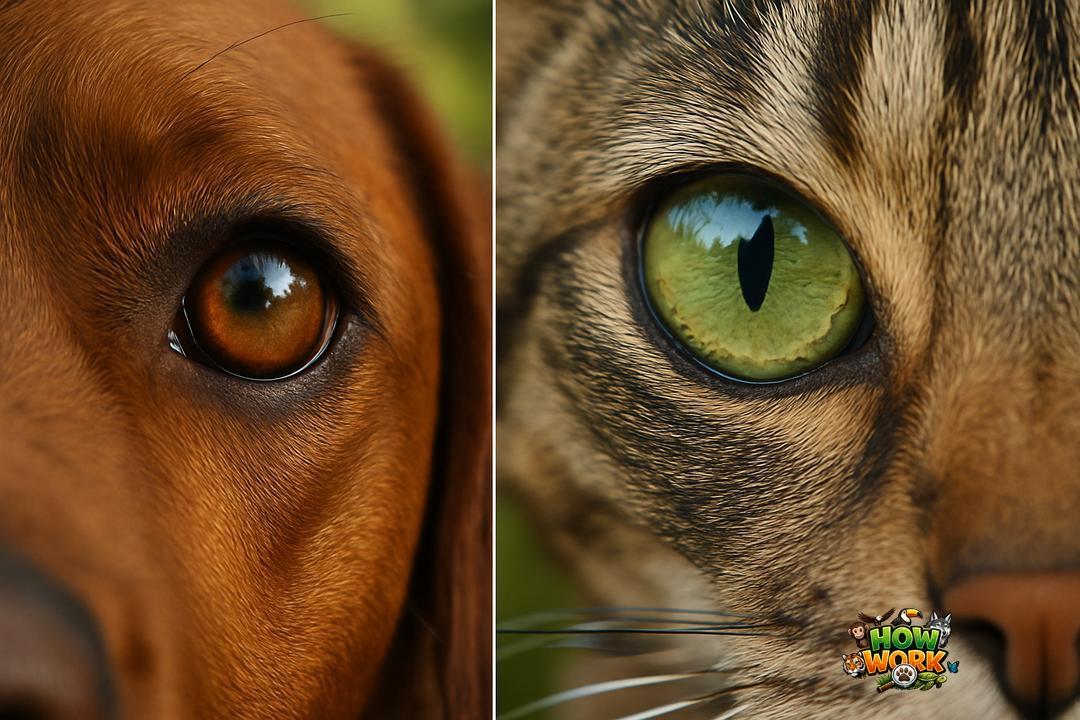
Ever wondered why your dog chases a red ball but ignores a green toy? Or how a hawk can spot a mouse from hundreds of feet above, while you’re still searching the lawn for your keys?
Scientists have discovered that animal vision varies as much as animal size or fur color. Some species see extra colors, others rely on ultra-sharp detail, and a few even “see” with heat. These differences aren’t just cool facts, they shape how animals hunt, hide, find food, and even play with us at home.
Most answers online just skim the basics, telling you dogs are colorblind and eagles have good eyesight. But they rarely explain why these adaptations exist, or how understanding them helps us connect with pets and wildlife.
This article takes you behind the eyes of animals. You’ll discover what the science says, see the world through your pet’s point of view, and get practical tips to make life more comfortable, and fun, for the creatures you love. Ready for a new way to look at the animal world?
How animal eyes evolved for survival
When it comes to survival, animal eye placement isn’t random. Where an animal’s eyes sit on its head, and what those eyes can detect, decide whether it hunts, hides, or outsmarts danger. Millions of years shaped these differences.
Binocular vs. panoramic vision: Positioning for survival
Predators need binocular vision, prey rely on panoramic vision. Predators like owls and big cats have eyes at the front. This gives them binocular vision. It lets them judge distance well and focus on their target. That’s how a hawk snatches a mouse in tall grass or a lion makes a surprise jump.
Prey animals, like rabbits or deer, have eyes on the sides of their heads. This creates panoramic vision. They can see nearly all the way around with little blind spot. The tradeoff? Less depth, but amazing early warning for approaching threats.
Tip: Watch your own pet bunny or bird. Notice how they move their heads, always scanning. It’s all about survival, not just curiosity.
Differences in rods and cones across species
Not all eyes handle light and color the same way. The secret is in the mix of rods and cones, special sensors in the eye. Mammals often have more rods, which detect shadows and help them see at dusk. That’s why your dog spots movement at night better than you do.
Birds, fish, and reptiles can have several types of cones. Some birds see colors we can’t even imagine, like ultraviolet, helping them pick food or mates. Mammals like us, or your dog, lost some cone types long ago so we see fewer colors.
In everyday life, this explains why dogs may ignore red or green toys but chase anything that moves after dark. Understanding rods and cones gives you a deeper look at every blink, chase, and stare in nature’s world.
Color vision: What animals see (and what they don’t)
When animals look at the world, the colors they see aren’t always like what we see. Some notice only a few main colors, while others experience a rainbow that’s invisible to us. This isn’t just a fun fact, it shapes how animals hunt, play, and survive.
Dogs and cats: The myth of black and white vision
Dogs and cats actually see some colors. The old story that dogs just see black and white is wrong. Dogs see best in yellow and blue, like someone with red-green colorblindness. Dogs see yellow and blue and may miss reds and greens. Cats, experts say, have color vision about ten times weaker than ours, mainly seeing blues and grays. Still, they aren’t stuck in a gray world. Only some fish (like the skate) really lack color vision at all.
Tip: Choose yellow or blue toys for your dog. You may notice they engage with these much more than with red or green items.
Birds and insects: Ultraviolet and beyond
Birds and insects see even more colors than we do. Birds use special cones to see ultraviolet light. So, a flower or feather looks super bright to them, showing patterns hidden from us. Birds see ultraviolet, which helps in finding mates and food.
Bees, butterflies, and some other insects have four cone types instead of three. This means insects see beyond our spectrum. Mantis shrimp are champions with sixteen cones, these guys see colors we can’t imagine, including ultraviolet, infrared, and polarized light.
If you’re out in nature, watch how birds react to sunlight or how bees find flowers. They use a color map very different from yours!
Superpowers in the animal kingdom: Extreme eyesight adaptations
Some animals have eyesight “superpowers” that go far beyond our imagination. These champions of vision thrive in places we can barely see, or use color and detail in ways we can only dream of. Here’s what’s behind their edge.
The mantis shrimp: 16 color receptors
Mantis shrimp have up to 16 types of photoreceptors. This means they can see ultraviolet, polarized, and even circularly polarized light, making their underwater world a burst of colors we can’t picture. By comparison, humans have only three color receptors.
In practice, this helps mantis shrimp spot prey and rivals hiding in plain sight. Their eyes even move independently, letting them scan rocks and sand without turning their bodies. If you keep reef tanks, try hiding colored objects, mantis shrimp may spot “invisible” patterns you miss.
Raptors and owls: Masters of sharpness and night vision
Eagles can see prey from two miles away and up to eight times sharper than us. This lets them hunt at great distances. Owls, by contrast, have five times more rods than humans, plus a reflective layer called tapetum lucidum for elite night vision. That’s how an owl tracks a mouse in darkness.
If you want to see this in action, watch raptors at sunset or try spotlighting an owl, their eyes may seem to “glow” back thanks to that unique eye layer.
How your pet’s vision shapes its world
Your pet doesn’t see the world the way you do. Motion and low-light sensitivity shape how dogs and cats notice what matters. Blurry colors and reduced detail guide their choices and daily routines.
Interpreting pet behavior through their visual perspective
Much of pet behavior is about motion and peripheral awareness. Dogs see the world in blue and yellow, other hues blend to gray. Cats focus on muted blues and grays. Both pets are much better at detecting movement than picking out fine details.
Dogs have a wide 240-degree field of view, letting them spot movement from the side, but their depth perception is limited. Cats, with strong night vision, spot prey up close but miss details at a distance. This is why your cat loves to pounce or your dog bolts at moving objects.
Tips to enrich your pet’s environment based on vision
Pick enrichment based on how pets see. Offer dogs blue/yellow toys. For cats, try high-contrast patterns and toys that move slowly to catch their keen motion-sense.
Pair toys with scent for extra fun, since pets use smell almost as much as sight. Avoid red and green objects, they look gray to dogs. Place food bowls in areas with soft light, helping cats and dogs enjoy their meals using their best natural senses.
What understanding animal vision teaches us about the natural world
Understanding animal vision gives us new ways to see the world. It reveals how birds, insects, and mammals are adapted for survival in ways we might never notice with our own senses.
By exploring how animals use sight, we discover hidden worlds. Bees see ultraviolet patterns on flowers, which act like runway lights guiding them to nectar. Birds use color signals to find food or mates, signals that may look dull to us but stand out like neon signs to them.
This insight matters in real life. If you observe your backyard, notice which flowers pollinators visit most. Often, color vision guides pollinators to blooms, shaping whole ecosystems.
Learning how other species perceive lets conservationists design habitats that work for animals, not just people. It also reminds us that diverse perception is key in nature. Every animal, from owl to goldfish, has a visual “toolkit” shaped by millions of years of adaptation.
The more we understand these differences, the better we can protect wildlife, enrich pets’ lives, and even see our own world through fresh, more curious eyes.