
Hydrothermal Vents: Alien Ecosystems Driven by Earth’s Heat
Hydrothermal vents reveal astonishing underwater life fueled by Earth's heat. Discover how these hotspots shape deep-sea ecosystems and inspire new scientific frontiers.
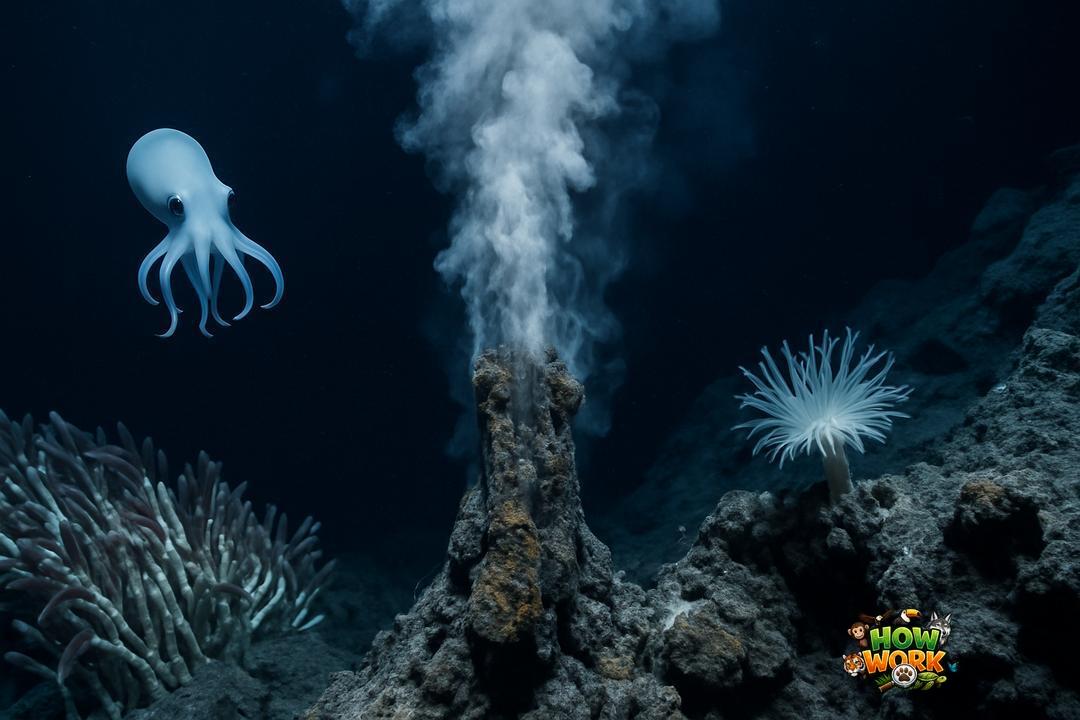
Imagine plunging into darkness miles beneath the waves, where sunlight never reaches, yet vibrant oases teem with life. That’s the paradox of hydrothermal vents, habitats so surreal many liken them to alien worlds.
Since scientists discovered the first vent communities in 1977, deep-sea research has revealed how these undersea hotspots are powered not by the sun, but by Earth’s internal heat and chemistry. Everything here is flipped: specialized microbes fuel food chains using toxic chemicals, not photosynthesis, and animals sport bizarre adaptations perfect for hellish temperatures. Growing curiosity about these places isn’t just scientific: questions now focus on how vents reshape ocean chemistry, support strange forms of life, and hint at possibilities on distant moons like Enceladus.
But most popular science glosses over the deep link between vents and the big questions: How do such harsh places sustain huge animal communities? What can vent life teach us about the limits of survival, or even the search for life beyond our planet? Quick tours rarely show why these mysteries actually change how we see our own world.
This guide dives deeper, connecting cutting-edge discoveries, practical conservation efforts, and real-life analogies to help you truly grasp why hydrothermal vents deserve a spot in every animal lover’s imagination. Get ready to see the deep sea not as a barren abyss, but a frontier bursting with life, hope, and ideas that go way beyond Earth.
What are hydrothermal vents and how do they form?
Hydrothermal vents are like Earth’s pressure valves hidden on the ocean floor. They form in places where our planet’s surface is restless and full of heat.
Geological processes creating vents
Hydrothermal vents form where tectonic plates pull apart or meet. Seawater seeps into cracks near mid-ocean ridges. There, the water gets superheated by magma and gushes out as mineral-rich water.
This journey can heat water up to 400°C (752°F), far hotter than boiling point on land. The first vents were found in 1977 at the Galápagos Rift. Scientists use deep-sea subs and cameras to study these mysterious places without risk.
If you ever see video footage from the deep, chances are it’s a hydrothermal vent, look for billowing clouds where the sea floor looks alive.
Types of vents: black smokers and white smokers
There are two main types: black smokers and white smokers. Black smokers shoot out dark clouds rich in metals like iron and sulfur. White smokers release lighter-colored fluids full of minerals like barium and calcium.
Both look otherworldly, but black smokers tend to be hotter and form tall chimneys. White smokers are cooler, with softer mounds. Some famous black smoker fields are on the East Pacific Rise, while white smokers are common along the Mid-Atlantic Ridge.
If you’re curious, many documentaries and nature shows feature live feeds from these vents. Watching them is like peering into another planet, without leaving Earth.
Life without sunlight: Unique vent ecosystems
Deep below the surface, life at hydrothermal vents isn’t just surviving, it’s thriving in total darkness. These ecosystems flip the script on what most people expect from life on Earth.
Chemosynthesis: Energy from chemicals not sunlight
Chemosynthesis is what powers vent life when sunlight is absent. Instead of using light, special bacteria convert chemicals like hydrogen sulfide from vent fluids into food for themselves and others.
This process supports complex microbial food webs that feed everything from tiny snails to huge tubeworms. Vent bacteria use the same basic idea as plants, but swap out sunlight for invisible molecules spilling from the Earth. If you want to experience this in real-time, check deep-sea expedition livestreams online, they sometimes feature active chemosynthetic communities.
Examples of vent organisms and adaptations
Vent animals have wild adaptations to extreme conditions. Giant tubeworms have red plumes for soaking up chemicals, and inside them, bacteria do the chemosynthetic heavy lifting.
Other vent dwellers, like shrimp and snails, depend on these bacterial powerhouses for food or even host them in their own bodies. With water temps topping 400°C at black smokers and toxins all around, animals here must deal with heat, pressure, and poison. Many have heat-resistant proteins and body parts built for soaking up chemicals, not sun.
There are now over 200 known vent fields worldwide, discovered since 1977. Each new site reveals crazy new life forms with tricks for survival, evidence that Earth’s rules can be broken in the best ways.
Extreme environments: Temperature, chemistry, and survival
Hydrothermal vents push the limits of what life can handle. Down here, animals and microbes face temperatures and chemicals that would destroy most surface life.
Temperature and chemical extremes
Some vent zones reach 340°C under crushing pressure. Gases like hydrogen sulfide and methane create toxic, acidic water. It’s nothing like the sunlight ponds we know.
Microbes called hyperthermophiles thrive here, living at temperatures even higher than Yellowstone’s hot springs. For example, Thermus aquaticus can survive up to 70°C, while vent bacteria can go far hotter. These conditions mean only the most robust life forms survive.
Many polyextremophiles deal with both high heat and acid. Some, like Sulfolobus acidocaldarius, use special cell membranes to avoid being cooked or dissolved, this kind of toughness inspires ideas for new medicines and cleaners.
Adaptation strategies for animals and microbes
Heat-stable proteins and unique cell membranes are keys to survival. Animals and microbes here use special proteins that fold tightly, refusing to break down at high heat.
Microbes also make biofilms and chaperones that help their insides handle stress. Halophiles, for example, store extra minerals to fight off salt or acid attacks. These tweaks at the cellular level make living at vents possible.
Real-world tip: Scientists now use these vent microbes in bioremediation and industry, thanks to their tough enzymes and membranes. That’s how knowledge from extreme life shapes technology on land.
How hydrothermal vents influence Earth and beyond
Hydrothermal vents do more than create weird undersea habitats, they actually help shape our whole planet. Even beyond Earth, these vents offer clues about where life could exist elsewhere.
Impact on ocean chemistry and global cycles
Vents pump out minerals that change ocean chemistry and help global cycles. They supply around 13% of the energy to the seafloor and release metals like iron and gases such as methane.
Marine life by the vents eats up 90% of vent methane before it can escape to the air. This limits greenhouse effects, since methane is 25 times stronger than CO₂ for trapping heat. Iron from vents even fertilizes big ocean areas, too little iron can trigger disasters, like Chile’s red tide.
Ocean pH dropped from 8.25 to 8.14 since 1751, meaning water is getting more acidic. Chemicals from vents play a big role in these changes. Want to see this science in action? Experts track vent chemistry to watch how oceans respond to climate change.
Vents as analogs for possible alien life
Vents show how life might start on other planets. Scientists think vents may have sparked life on Earth about 2.8 billion years ago.
Their high temperatures, pressures, and pH levels create a “life without sunlight” world, a model for possible life in the subsurface oceans of moons like Enceladus and Europa. When you read about NASA looking for life on icy moons, remember: hydrothermal vents are their guide, showing us what’s possible in far stranger places than our backyard ocean.
Human curiosity: Research, discoveries, and conservation
Human curiosity has always pushed us to illuminate the ocean’s darkest corners. Exploring hydrothermal vents has revealed not just new species, but entire ways of living we never imagined.
Breakthrough technologies and methods
High-tech tools let us visit vents safely and collect new data. Submarines like Alvin found the first vents in 1977. Now, scientists use ROVs (remotely operated vehicles) and cameras to reach deeper, longer, and safer.
These days, environmental DNA (eDNA) can identify animals from water samples, so researchers don’t always need to catch or disturb wildlife. This method led to the discovery of new vents and even entire new families of vent shrimp. Want to help? You can follow live dives or support deep-sea research groups online.
Threats: mining, climate change, and protection efforts
Modern mining and climate change threaten hydrothermal vents. Deep-sea mining for rare metals started around 2011. It can destroy fragile ecosystems that might hold medicines or clues to Earth’s past.
Vents also face risk from global warming, which can change water chemistry and animal survival. Still, over the last decade, protection zones around vents have increased, giving some hope. If you’re passionate, learn more about ocean policy or join groups pushing to keep the deep sea wild.
Why hydrothermal vents matter for our planet and the search for life
Hydrothermal vents matter because they prove that life can thrive without sunlight, shape our planet’s chemistry, and offer hope in the search for life beyond Earth.
Since their discovery in 1977, these deep-sea hotspots have shown that chemosynthetic bacteria can power entire food webs, without any help from the sun. This discovery rocked science, proving that some of Earth’s most unique species depend on chemical energy rather than photosynthesis.
Vents also drive cycles of key elements. They help control the flow of methane, which is a powerful greenhouse gas, and release iron that many ocean animals need. Without vent minerals, big parts of the global ocean wouldn’t be nearly as rich in life.
This isn’t just about weird animals. NASA studies vent ecosystems as models for finding life on moons like Europa and Enceladus, where sunlight never reaches subsurface seas. Even theories about the origin of life on Earth now often start at vent-like places.
If you’re passionate about science or even just curious by nature, following vent research connects you to major questions about our planet, and what else might be alive in the cosmos. You can support groups working to protect these sites or keep up with global discoveries that just might change how we see life itself.