Mangrove Forests: The Crucial Coastal Nurseries of the Sea
Mangrove forests shelter wildlife, store carbon, and protect coastlines. Discover how these unique habitats work and why their survival matters.
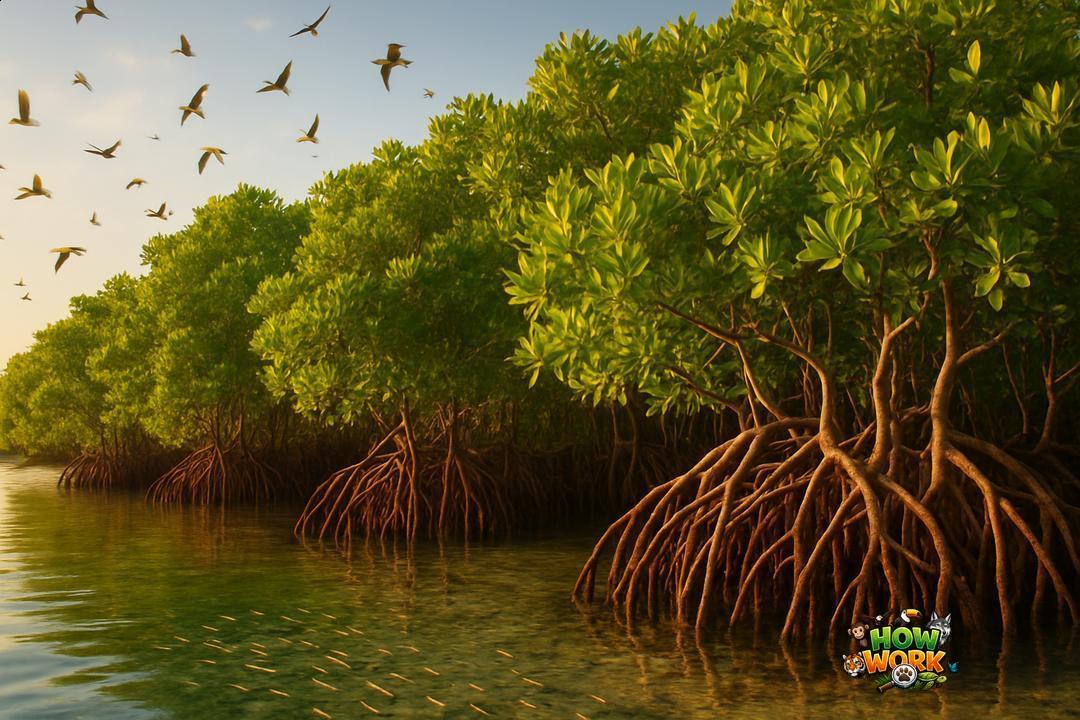
Imagine a tangled green labyrinth where land and sea blur, baby fish dart between roots, and birds swoop overhead. That’s the world of mangrove forests, living barriers against storms, bustling nurseries, and nature’s intricate filtration systems all at once.
These forests aren’t just swampy thickets, they shelter hundreds of animal species, store immense amounts of carbon (something most forests can’t match), and prevent shorelines from washing away. Scientists point out that 50% of global mangroves have disappeared in the last half-century, and another 50% face collapse by 2024 if nothing changes. That should make us pause.
The trouble? Most guides mention their ‘importance’ but skip how mangrove loss actually unfolds, why restoration is tricky, or why their value goes beyond biodiversity. Simple “plant more trees” slogans skirt the tough realities on the ground and in the water.
This article aims to change that. Get ready for an in-depth, practical tour: how mangroves support coastal life, protect local communities, store blue carbon, clean water, and why saving them isn’t just for environmentalists, it’s everyone’s job now.
What makes mangrove forests unique coastal ecosystems?
Mangrove forests are nature’s champions at the border of land and sea. They survive where other plants fail, turning salty, muddy shorelines into thriving, life-filled ecosystems. Let’s break down what truly sets these unique coastal ecosystems apart.
Defining mangroves: geography and species
Mangroves are salt-loving trees found in 100+ tropical and subtropical countries. There are between 50–80 mangrove species worldwide, growing from small shrubs up to towering 40-meter giants. Unlike most trees, they don’t mind getting their feet wet, or salty.
Look for mangrove forests where rivers meet the ocean, often in muddy, low-oxygen zones other plants can’t tolerate. Some species even filter out salt at the roots, or get rid of it through their leaves, a trick that lets them survive salinity up to twice that of seawater. Next time you visit a tropical coast, try spotting the different shapes and heights mangroves can take.
Mangrove root systems and their adaptations
The secret weapon is their complex root networks. These twisty roots anchor unstable soils, buffer waves, and prevent erosion. Some roots grow out and up like stilts, helping trees breathe above water and survive tidal floods.
If you’ve walked through a mangrove at low tide, you’ve seen how the tangle of roots traps sediment, filters pollutants, and shelters everything from tiny crabs to young fish. Roots aren’t just tree support, they’re an entire underwater city! A local tip: fishers often target these root zones for the best catches, because that’s where young sea life starts out.
Overview of global distribution and hotspots
Mangroves cover about 140,000 square kilometers globally, roughly the size of Greece. Major hotspots stretch across Southeast Asia (especially Indonesia and Thailand), the Caribbean, Mexico, and Florida, which protects around 600,000 acres in the U.S. alone.
These forests do heavy lifting: they help support 75% of commercially caught fish and shield millions of people by buffering storm surges. In 2024, experts estimated mangroves provide $855 billion in flood protection worldwide. If you want to witness their benefits firsthand, visit restored sites in Florida or Indonesia, local guides can show you how these forests bounce back and why communities fight to save them.
The nursery of the sea: biodiversity and wildlife in mangroves
Mangrove forests earn the title “nursery of the sea” for good reason. They help keep our oceans full of life, offering shelter and food to young animals that grow up to become adults in open waters and along the coast.
Key animal species that depend on mangroves
Many key animal species rely on mangroves for survival. It’s not just fish, these forests also support creatures like proboscis monkeys, American crocodiles, Bengal tigers, and the tiny Key deer.
Several species feed and nest here. For example, the American crocodile uses mangroves to hide from predators and humans. If exploring a local mangrove, watch carefully, you might spot crabs and monkeys blending into the background.
Fish nurseries: supporting life cycles
Mangrove roots form “juvenile nurseries” for over 50 fish species. Snapper, grouper, and especially the huge Goliath grouper spend their early years hiding in these tangled roots.
Amazing fact: young fish can stay sheltered in mangroves for up to six years. According to conservation groups, 80% of the global fishing catch depends on fish that use mangroves when young. If you fish or snorkel nearby, look for small schools darting among the roots.
Birds, crabs, and unexpected residents
It’s not just fish that call mangroves home, 29 bird species and countless invertebrates do, too. Watch for roseate spoonbills, brown pelicans, and herons nesting in thick branches overhead.
Crabs are everywhere, sometimes even in the trees! Snails, sponges, and colorful jellyfish cling to roots. One tip: early morning is the best time to spot birds and crabs on the move. “Many wildlife species rely on mangroves for foraging and nursery areas,” says Smithsonian’s Eggleston, a reminder of why protecting these forests matters for nature and people alike.
Mangroves as frontline defenders: shoreline protection and storm resilience
Mangrove forests are natural frontline defenders for coastlines. Their tangled roots and dense vegetation do a job even concrete can’t match: keeping land and people safe as storms grow stronger around the world.
How mangroves prevent erosion
Mangroves prevent erosion by trapping sediment and absorbing wave energy. Their roots hold soil together and slow down water flow, which stops shorelines from washing away.
Research shows mangroves can attenuate waves up to 4 meters tall. Want to boost erosion protection? Experts say restoration projects work best when locals help plant wide mangrove belts along vulnerable coasts.
Buffering communities from storms and floods
Healthy mangroves lower flood risk for 15 million people every year. They reduce storm surge heights and block powerful waves before they hit coastal towns.
Studies put the global value of this protection at $855 billion in flood protection over 100 years. Consider supporting organizations that combine mangrove planting with local flood planning, this teamwork multiplies the results.
Case studies of storm impacts in mangrove vs. non-mangrove areas
Real-world disasters prove just how vital mangroves are. After Hurricane Irma in 2017, South Florida’s mangroves cut flooding by 14% and saved $725 million in property damage. During 2022’s Hurricane Ian, mangroves reduced damage by nearly 30%, about $4.1 billion saved.
It’s not only Florida. A 600-meter stretch of mangroves in Shenzhen, China, cut storm surges by 1.4 meters. The lesson: communities with more mangroves bounce back faster after big storms. For best results, combine wide mangrove belts with strong levees, not just “gray” infrastructure.
Blue carbon: how mangrove forests fight climate change
Mangroves are climate heavyweights when it comes to capturing carbon. Let’s look at how these “blue carbon” factories store and protect the planet’s carbon, often doing better than other habitats or even land forests.
The science behind blue carbon storage
Mangroves lead all coastal ecosystems in blue carbon storage. They can store up to 10 times more carbon per unit area than tropical rainforests. The secret? Layers of deep, waterlogged soil keep carbon locked away for thousands of years, sometimes longer.
Most of that carbon goes underground. Healthy mangroves can sequester 6–8 Mg CO₂e/ha annually. If you want to help, support local efforts that protect mangroves from being cleared or drained. Even small conservation actions can make a lasting difference.
Mangrove carbon vs. other coastal ecosystems
No other coastal ecosystem stores as much carbon as mangroves. Mangroves trap about 1,494 Mg CO₂eq/ha, far more than tidal marshes or seagrass meadows.
For comparison: tidal marshes store about 951, and seagrass only 607 Mg CO₂eq/ha. Real-world example? Northwestern Mexico’s mangroves: keeping them intact could stop 10.8 million MgCO₂ emissions by 2030.
Policy implications and current initiatives
Worldwide, blue carbon is moving into climate policy. The United States was the first country to track blue carbon in its official emissions count. Some regions now set up protected mangrove concessions to sell carbon credits, funds go back into conservation and community jobs.
To play your part, look for carbon offset programs with proper accreditation, or support organizations pushing for blue carbon protection through legislation and education.
Pollution filters: mangroves’ role in water cleaning and nutrient cycling
Mangroves do more than provide habitat, they act as powerful pollution filters. The science is clear: these forests help keep coastal water clean, making life better for people and nature alike.
Absorption of pollutants and heavy metals
Mangrove roots trap toxic heavy metals before they spread to open water. These roots absorb up to 10–100 times higher concentrations of metals like iron and nickel near mining sites, compared to clean areas.
The trick? 90% of these metals stay in the roots, with little reaching the leaves or animals. In New Caledonia, mangroves protect water supplies from mining pollution, communities rely on them as a living shield. If you live near an estuary or mining site, look for healthy mangroves as a sign of cleaner water.
How nutrient cycling supports surrounding habitats
Mangroves filter 80–90% of nitrates and phosphates from runoff, reducing the risk of harmful algal blooms and fish kills.
Special bacteria in mangrove soils turn dangerous chemicals into harmless nitrogen gas. This boosts water clarity and helps support biodiversity in fisheries, shrimp ponds, and seagrass beds nearby. Local farmers can protect their water by supporting mangrove belts next to croplands.
Recent research on water quality improvement
Scientists now call mangroves “sustainable phytoremediation agents.” New studies from Vietnam’s Can Gio Forest show that heavy metal pollution can shrink forest growth by 80%, but replanting reverses the damage.
The biggest threat now? Pollution and urbanization are destroying 1–2% of global mangroves every year. Still, targeted restoration is a proven way to bring water quality and wildlife back, even to damaged coasts.
Threats, ongoing loss, and paths to mangrove recovery
Mangrove forests are in danger, but there’s hope for recovery. Understanding what’s causing loss, and what actually works in restoration, can help protect these vital habitats for the future.
Main drivers of mangrove loss
Farming and aquaculture cause 47% of global mangrove loss. Shrimp ponds, rice paddies, and oil palm plantations are the biggest culprits since the early 2000s. The rest comes from coastal erosion and extreme weather, problems made worse by rising seas.
If you see new shrimp or rice farms replacing mangroves, know that it puts wildlife and local fishing jobs at risk. Supporting sustainable seafood and products helps slow this trend.
Why restoration projects succeed or fail
Community-led restoration gets the best results. Projects succeed when locals lead, like Vietnam’s 12,000 ha replanting. Restorations fail when they ignore natural tidal flow or don’t include local knowledge, seedlings just wash away or die.
Practical tip: if working on restoration, always consult people who rely on mangroves every day, they know what works (and what doesn’t).
Innovative conservation strategies worldwide
Satellite tech and blue carbon funding are changing the game. NASA/Landsat now tracks mangrove loss from space, helping cut human-driven loss by 73% since 2000 in some regions. Many groups are funding projects through “blue carbon” credits, selling the value of stored carbon to finance more protections.
Want to help? Look for conservation projects that use both local leadership and high-tech monitoring. “Protecting mangroves takes science, but it also takes everyone’s support,” say global experts on coastlines.
Why the future of mangrove forests is everyone’s concern
The future of mangrove forests affects everyone, not just people living on the coast. When mangroves disappear, it sparks global climate shifts, wipes out protective barriers, and collapses local economies relied on by millions.
Here is the thing: in the last 50 years, one-third of all mangroves have vanished, and up to 50% could disappear by 2050. Their loss means massive releases of stored carbon, faster climate change, and more severe storms smashing unprotected shores. Shrimp farming alone drives about 38% of mangrove loss worldwide, when you order seafood, it pays to check the source.
Real stories make this clear. Thailand has lost 84% of its mangroves; some West African countries have dropped by more than 60%. Experts say mangroves deliver up to $1.6 billion a year in ecosystem benefits, from supporting fish nurseries to blocking erosion and trapping pollution. “Mangroves could functionally disappear in just 100 years if nothing changes,” warn researchers.
What can you do? Support community-led restoration, buy sustainable seafood, and add your voice to conservation campaigns. Protecting mangroves isn’t only about forests, it’s about food, homes, and a healthy future for everyone, everywhere.