Cephalopods Beyond the Octopus: Squids, Cuttlefish, and Nautiluses
Cephalopod evolution isn't just about octopuses. Discover the origins, intelligence, and secrets of squids, cuttlefish, and nautiluses now.
Imagine walking into a room full of geniuses, except they all have tentacles and can disappear in a flash. That’s what it’s like when you look beyond the familiar octopus and dive into the world of squids, cuttlefish, and nautiluses, creatures whose evolutionary journeys make even science fiction seem tame.
While most nature documentaries focus on octopuses as the cephalopod superstars, the truth is these animals have been rewriting the rules of evolution for more than 500 million years. Here’s why everyone from paleontologists to marine biologists is obsessed with the story of cephalopod evolution: it’s a tale of ancient seashell bearers morphing into sophisticated, shell-less predators with some of the largest brains in the ocean.
The problem? Most articles gloss over the wild innovations behind these creatures. They miss how shedding shells led to wild new ways of moving, or why these animals’ jumbled genomes hold clues about the evolution of intelligence itself. If you’re used to quick listicles and watered-down trivia, you’ve barely scratched the surface.
In this article, you’ll get the fascinating backstory of cephalopods: from how a simple, spiral shell paved the way for brainy, color-changing escape artists, to what cutting-edge genome science is revealing right now. Whether you’re curious about animal minds, evolutionary biology, or just want animal stories that truly surprise, you’re in the right place.
How cephalopods conquered the oceans: their evolutionary origins
Picture the earliest oceans, full of life, but missing the swimmers we now know. Cephalopods didn’t just appear; they transformed the sea with a move that changed ocean life forever.
Shells and the earliest ancestors
Ancient cephalopod ancestors conquered new habitats by inventing the chambered shell with gas inside. This lets them float up and down, just like modern submarines.
Fossils like Plectronoceras show this started about 500 million years ago. Their shells weren’t just for protection, they became the first active swimmers before true fish appeared! If you’ve ever seen a living nautilus at an aquarium, you’ve glimpsed this ancient design in action.
Want a hands-on lesson? Next time you visit a science museum, compare a nautilus shell’s chambers to an empty snail shell. The difference shows how cephalopods’ shells gave them control in open water.
Branching into nautiloids, ammonoids, and coleoids
Surviving extinctions led cephalopods to split into three big groups, nautiloids, ammonoids, and coleoids. The Ellesmerocerida made it past a massive extinction about 470 million years ago, then evolved into more groups with new innovations.
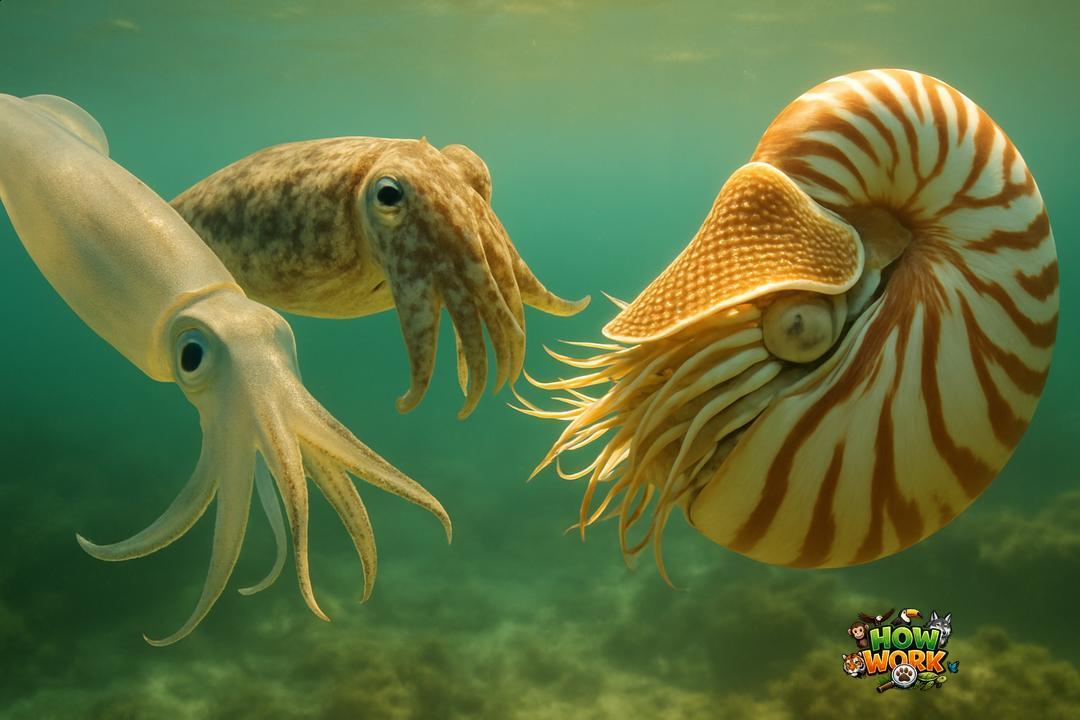
Some, like nautiloids, kept their external shells for safety. Others, facing tough competition from jawed fish, lost those shells and became today’s squids and octopuses, coleoids. Keeping or losing their shells helped cephalopods adapt to new niches.
Shell loss and coleoid rise were key. According to experts, “the octopus’ intelligence may stem from abandoning the shell hundreds of millions of years ago.” If you’re curious, compare a squid’s thin internal pen to a nautilus shell the next time you see them side by side in a display, it’s evolution in real life.
The great shell transformation: protection to propulsion
Imagine carrying a backpack so big and heavy you can barely move. That’s what ancient cephalopods faced, until evolution changed the rules.
Shell reduction and the birth of jet propulsion
Shell reduction unlocked jet propulsion for cephalopods. With smaller or lost shells, these animals became faster swimmers, able to shoot bursts of water from their bodies, a kind of natural jet engine.
Heavy shells made it tough to escape predators or chase prey. But losing most of that weight meant squids and octopuses could zip through the ocean with real speed. Try watching slow-motion videos of modern squids and nautiluses; you’ll see how light bodies win in a race.
Why some kept shells and others shed them
Not all cephalopods ditched their shells. The nautilus kept its protective spiral, trading speed for safety. This strategy still works, especially in deeper waters where quick moves matter less.
Other lineages, like squids and cuttlefish, bet on agility. Lightweight internal structures let them dodge, weave, and survive where heavy-shelled animals could not. Each approach fits a unique ocean lifestyle. If you visit an aquarium, compare how nautiluses drift while squids dart, it’s evolutionary choice in action.
Brains, nerves, and intelligence: the rise of cephalopod cognition
Ever met an animal that could beat you at solving puzzles? For cephalopods, that’s just a Tuesday. Their brains are wired for action, memory, and some seriously clever moves.
Comparing neurons and brains: octopus vs. squid vs. cuttlefish
Cephalopods have some of nature’s biggest brains for invertebrates, with up to 500 million neurons packed tight. That’s more than most rodents!
Octopuses use arm ganglia for smart, independent moves. Cuttlefish remember the “what, when, and where” of events thanks to episodic-like memory. Squids think fast in groups, reacting to threats with quick signals and speed. Their donut-shaped brains literally wrap around their throat.
Want to see brainpower in action? Try finding videos of octopuses untwisting jars or cuttlefish picking colors, they showcase real cephalopod intelligence.
Puzzle-solving, play, and learning abilities
Puzzle-solving and planning are daily life for many cephalopods. Octopuses can open jars and unscrew lids, even learning from past attempts.
Cuttlefish passed a “Stanford marshmallow test,” waiting for better food, a trick some kids struggle with! Experts say, “miRNAs play a fundamental role in the development of complex brains.” Still, researchers warn that not all flexible behavior is true cognition.
If you love animal training, use puzzles with your pets at home and watch how they tackle problems. It’s a small way to step into the fascinating world of cephalopod intelligence.
Masters of disguise: the evolution of camouflage and communication
Have you ever seen a cuttlefish become invisible? Cephalopods might be camouflage masters, but there’s much more to their undercover skills than meets the eye.
How chromatophores and skin cells became tools
Cephalopods evolved specialized skin cells called chromatophores for instant color change. Hormones control these cells, helping the animal match its surroundings and avoid being seen by predators or prey.
In cuttlefish, octopus, and squid, these cells work with iridophores and leucophores to create a living palette. Scientists say, “No single anti-predatory strategy is superior, efficiency depends on ecological context.” Next time you visit an aquarium, try to spot a cuttlefish blending into gravel or sand. It’s nature’s quick-change artist in action.
Light signals, body language, and social behaviors
Camouflage is just part of the story. Cephalopods also use body language and light displays for social signaling. Some, like the flamboyant cuttlefish, flash bold colors to warn rivals or attract mates.
Experts note, “Animals learn to associate a color with a bad experience,” like predators avoiding bright, toxic species. While cephalopods don’t use toxins as much, their shifting colors can still warn or confuse. For a closer look, watch slow-motion videos online; you’ll see squid pulsing with shimmering displays while responding to friends and threats alike.
Modern breakthroughs: decoding cephalopod genomes and what’s next
What’s inside a cephalopod’s DNA? Recent studies show their genomes are as wild and clever as the animals themselves. Genomics is helping scientists finally connect brain, behavior, and deep-sea wonders.
Genome scrambling and unique gene expansions
Cephalopod genomes are incredibly scrambled. In fact, the common octopus genome holds 2.8 billion base pairs and over 23,000 genes. Researchers say it’s more like a blender than a simple copy-and-paste job.
The big surprises: protocadherin genes (168 in octopus) and C2H2 zinc finger genes (over 4 times more than other mollusks). These help shape big brains and adaptability. The vampire squid takes it further with a giant genome, about 11 billion base pairs.
If you’re interested in science, follow news on single-cell genomics. It’s a hot field opening doors for all animal lovers.
What future research may reveal
New studies will map how DNA makes minds. Using single-cell RNA sequencing, researchers can see which genes build smart brains or fast reactions.
The hope: we’ll learn why cephalopod intelligence and problem-solving can rival even vertebrates. This could change how we think about animal minds entirely. Curious families and students can track discoveries through trusted marine biology sites or science podcasts to see the story unfold.
What cephalopods teach us about animal minds and ocean evolution
Cephalopods show us that big, smart brains can evolve more than once. They are proof that intelligence doesn’t have to follow the same story as mammals or birds. Cephalopods, like octopuses, squid, and cuttlefish, developed complex nervous systems all on their own.
Scientists call this “independent evolutionary experiment.” That means large brains and advanced problem-solving skills popped up in cephalopods without social life or parental care. For example, the common octopus has about 200 million brain neurons, way more than a sea slug’s 18,000. Squids’ brains grow to 1.5 times their birth size.
Real-world tests show their thinking: octopuses open jars, untie knots, and use coconut shells as portable homes. Their brains rely on unique gene families and heavy use of RNA editing, parallel to, but separate from, what happens in mammals.
The lesson? Ocean evolution shaped minds in new ways to survive predators and outsmart others. Curious about animal intelligence or ocean history? Watch octopus and squid solve puzzles online or visit an aquarium. Cephalopods remind us there’s always more than one way for nature to build a mind.