Sponges and Anemones: The Stationary Life of the Ocean Floor
Sea sponges and anemones captivate with odd beauty and hidden roles. Uncover facts, myths, and their surprising medical potential in ocean life.
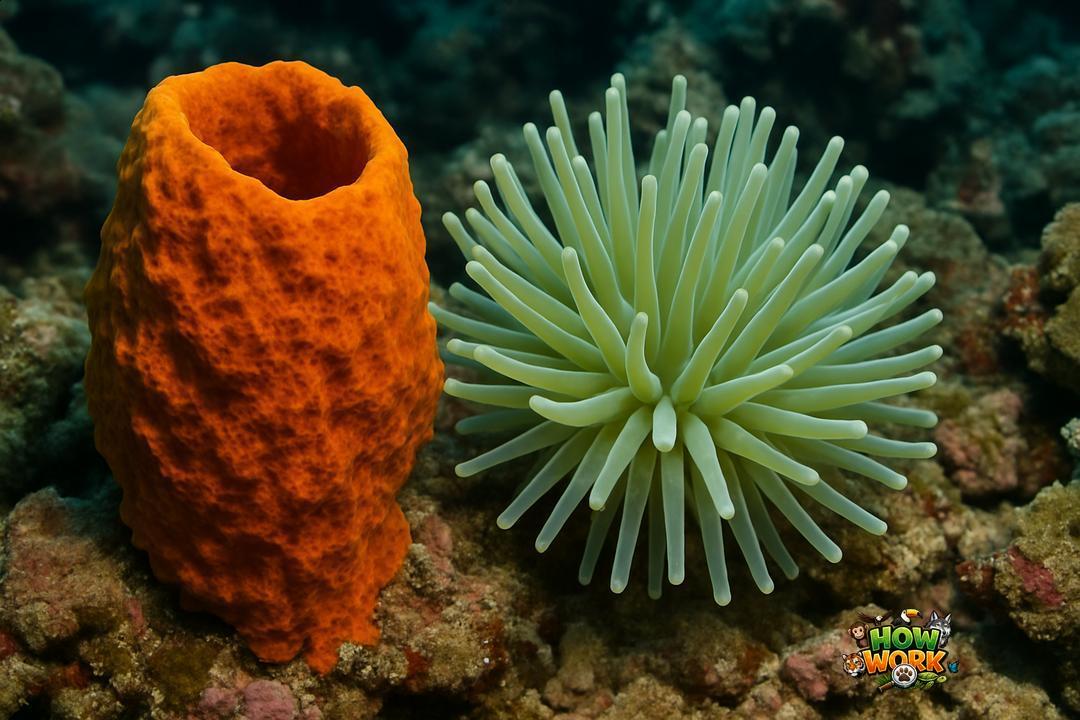
Imagine sinking beneath the waves, gliding over the ocean floor, and seeing what seems like a garden made of stone and silk. Sea sponges and anemones turn the seabed into a living tapestry, combining alien elegance with practical survival.
These creatures may be rooted in place, but their worlds aren’t static. Biologists have found that sponges can live up to 200 years, and some anemones hit the century mark. Both species team up with fish, algae, or even bacteria to defend themselves and provide food. Some wild discoveries? New sponge toxins that might one day fight disease, and anemones that can actually swim when threatened.
Here’s the thing: many articles lump sponges, anemones, and corals together, or gloss over the weird but important details of their lives. It’s easy to miss what makes each unique, and why their stories matter for our oceans and for us.
This article pulls back the curtain on these mysterious neighbors. You’ll get an inside look at how they eat, defend themselves, form bizarre partnerships, and even star in modern medicine. Ready to meet the quiet powerhouses of the sea?
Meet the stationary wonders: what sets sponges and anemones apart?
Ready to meet the ocean’s “stay-in-place” pros? Sponges and anemones might look like plants, but each brings its own set of clever tricks and jobs to the undersea table. Let’s break down what really sets them apart.
Physical traits and anatomy
Sponges are full of tiny pores, while anemones wave stinging tentacles.
Sponges have soft, squishy bodies covered in pores. These tiny holes pull in water so sponges can filter out food. They do not have nerves, a brain, or muscles, just a simple structure lined with special cells called coanocytes. Anemones, on the other hand, have a central body surrounded by tentacles armed with venomous cells to catch and stun prey. Their “mouth” is also their only opening for eating and getting rid of waste.
Want to spot the difference? Sponges feel rough or squishy and don’t move. Anemones will react if you gently touch their tentacles, often pulling them in.
Classification: Porifera vs. Cnidaria
Sponges belong to Porifera; anemones to Cnidaria.
The Porifera (“pore-bearers”) group includes around 9,600 sponge species. They are some of the oldest animals alive, possibly over 1 billion years old. Anemones are part of the Cnidaria family, which also includes jellyfish and corals. Unlike sponges, cnidarians have real tissues and a simple nervous system. That’s why anemones can move their tentacles or even shift location if conditions change.
Fun tip: If you see something stuck in one spot filtering water, it’s usually Porifera. If it moves or stings, think Cnidaria.
How to tell apart sponges, anemones, and corals
Sponges look porous and never have tentacles, anemones have wavy tentacles, and corals are hard and stone-like.
Many people mix them up. Sponges are always fixed and never form hard skeletons like corals. Anemones can look “flowery” on rocks or reefs but a close look reveals the tentacles. Corals may seem similar to anemones, but they’re colonial and build tough, rocky homes for themselves, unlike the soft, often solitary anemone.
Try this next time you visit an aquarium: Look for pores to ID sponges, moving tentacles for anemones, and hard, stony surfaces for corals. That simple checklist clears up most confusion!
Life as a fixture: feeding, reproduction, and daily survival
Ever wonder how ocean animals survive without ever taking a step? Sponges and anemones have turned staying put into an art. Let’s dig into their clever habits for feeding, growing, and staying alive on the seafloor.
How they feed: filters and stingers
Sponges filter tiny food from water, while anemones use stinging tentacles to grab prey.
Sponges are filter feeding sponges. They suck in water through pores, trapping bits of food as small as bacteria. Anemones use their stinging anemone tentacles for hunting. These tentacles shoot out tiny barbs to stun shrimp or fish and pull them in. If you watch a sea anemone in a tank, you might see it catch lunch in slow motion.
Reproduction secrets: splitting, budding, and spawning
Sponges and anemones can multiply without moving, using budding, splitting, or releasing eggs and sperm into the water.
Some sponges just split, a piece breaks off and becomes a new sponge. Others make tiny buds that grow alongside them or float away. Anemones often do the same. Many can also spawn, releasing thousands of eggs or sperm to drift and settle as new animals.
Next time you see a clump of tiny sponges or anemones together, it might be a budding event in action.
Adaptations to stay alive on the ocean floor
Both have strong survival skills to handle currents, predators, and wild changes in their environment.
Sponges protect themselves with tough or spiky bodies. Anemones rely on their stings and their ability to close up tight. Staying put saves energy, reduces risk, and lets them focus on feeding and growing. No legs? No problem if you have the right stay-put survival skills.
Look for these survival tricks on rocks, piers, or tide pools, nature’s proof that moving isn’t the only way to win.
Remarkable partnerships: symbiosis, defense, and surprising animal behaviors
The ocean floor is full of teamwork, and some plot twists. Many sea sponges and anemones depend on partners or crazy survival tactics to make it through each day. Let’s check out how these “quiet” creatures play some of the most dramatic roles under the sea.
Clownfish, algae, and other roommates
Clownfish and anemones are famous for their mutual teamwork.
The mutualism with clownfish means the fish gets protection from the anemone’s sting, while it feeds and cleans the anemone. Even their waste helps! A clownfish’s body has a protective mucus coating so it doesn’t get stung. In fact, researchers say clownfish sometimes feed their host pieces of clam, a rare fish/host bond. Try spotting a real pair next time you’re at a reef or aquarium.
Defensive tactics: stings, toxins, and camouflage
Most anemones use venomous tentacles for defense, while sponges and other invertebrates rely on toxins or camouflage.
Clownfish are immune to these stings but predators are not, so the pair stays safer together. Cleaner wrasses also have social partnerships where they “pick” parasites, and guard crabs defend coral by stinging away threats. These tricks create a web of natural alliances and shields.
Anemones that swim and carnivorous sponges
Some anemones can actually swim, and certain sponges are carnivorous.
A few anemone species can detach and float away if danger looms. Even more surprising, carnivorous sponges exist; instead of filtering food, they catch prey with special hooks. These rare skills show that life on the seafloor is way more active, and weird, than it looks.
When you next visit a tide pool or marine center, ask a guide to point out a swimming anemone or carnivorous sponge. They’ll be glad you know to ask!
From ancient creatures to biotech stars: their impact on humans and ecosystems
Creatures from the dawn of life, like sponges and anemones, matter greatly today. These ancient animals connect us to Earth’s distant past and play important roles in modern science and conservation.
Ancient Survivors
Sponges and anemones first appeared over 500 million years ago. They survived mass extinctions and dramatic changes in Earth’s oceans, making them living fossils. Their existence helps scientists understand early animal evolution and the history of life on our planet.
Contributions to Science and Medicine
Modern research uses sponges and anemones in exciting ways. Scientists have discovered new medicines, including potential cancer drugs and antibiotics, from chemicals produced by these creatures. Their simple yet resilient bodies also hold clues for studying how animals survive environmental stress.
Conservation Importance
Today, climate change and pollution threaten their habitats. By studying and protecting sponges and anemones, we help preserve biodiversity and the ocean’s health. They show us that even Earth’s oldest animals are still vital for the future of marine science and ecosystems.
What sea sponges and anemones reveal about our changing oceans
Sea sponges and anemones reveal critical warning signs about our changing oceans.
Both groups react to ocean warming and bleaching. When water gets hot, like a rise of just 2.7°C above the local record, sponges and anemones lose their symbiotic algae. Without their algae, many become pale or “bleached,” making it harder for them to get energy and survive. In the Gulf of Eilat, this has led to an 86% drop in anemone populations and about a 74% drop in clownfish, since 1997.
Even so, some anemones show resilience. For example, while bleached, certain species keep their stinging powers, helping them catch food during tough times. But there’s a catch, anemones and sponges grow slowly. With lifespans up to 100 years, recovering from damage or climate shocks can take decades.
Scientists now label them as Vulnerable Marine Ecosystems because they’re early indicators of bigger ocean problems. If you see pale sponges or anemones in tidal pools or aquariums, it could hint at warming seas or pollution impacts. By keeping an eye on these animals, we get a real-time look at how climate change is reshaping ocean life, and what we might lose if we don’t act.